Execution credibility

Working infrastructure. No blurred lines.

The blockchain and networking foundation exists in open source today. The service protocol and terminal product layers are intentionally separated and explicitly identified as the next delivery surface.

Implemented foundation TOS Core
  • Native TVM actor execution and asynchronous value-bearing messages
  • Masterchain, shardchains, validator engine, and full-node stack
  • ADNL, DHT, RLDP, QUIC, TOS Sites, and DNS resolution
  • Wallet, cryptography, JSON-RPC, indexing, and operator tooling
  • Agent Account, Service Actor, Task Escrow, and Dispute foundations
  • Capability Registry and Proof Attestation foundations
Verify in the repository
Planned product layer TOS Network
  • Canonical service descriptors, sessions, quotes, and receipts
  • ARD catalogs, independently deployable Registry, and bounded federation
  • Public .tos registration with verified ARD gateway bindings
  • Edge Core, terminal installers, and runtime adapters
  • Managed AI terminal and Physical AI terminal distributions
  • OpenFox scout, guarded testnet worker, and bounded production agent
  • Home and site relays, low-latency settlement, and stronger evidence
  • Cross-implementation conformance and extended resource-soak testing
Review the implementation plan
Demand
People
Applications
Autonomous agents
Autonomous operator
OpenFox
Skills + economics
Policy + audit
Service plane
ARD Registry
Authentication + quotes
Receipts + evidence
Owner-operated supply
Managed AI terminals
Physical AI terminals
Other service profiles
TOS Core
Identity + authority
Escrow + settlement
Network + transport

Intelligence is leaving the data center.

Open-weight models in the 8-14B range now run directly on a Mac mini, a gaming PC, a home NAS, or a Jetson-class box, capable enough for tool calling, coding, and retrieval, not just chat. That turns a growing population of ordinary owner-operated devices into potential agent nodes, not just endpoints.

Cloud-only pattern
UserCloud frontier model
Agent mesh pattern
User Local agent Nearby edge node Regional compute Cloud frontier model

Escalates outward only when the nearer tier can't meet the request's capability, latency, privacy, or evidence bar.

2-4B

Mobile AI

Phones, wearables, IoT. Voice, control loops, sensor interpretation.

8-14B

Edge AI

Mac mini, MacBook, gaming PC, NAS, Jetson-class boxes. Agents, coding, RAG, tool calling.

30-70B

Regional AI

Enterprise and aggregation-tier servers. Knowledge bases, complex reasoning.

200B+

Cloud Frontier AI

Data-center deployments. Frontier research, large-scale training.

The Edge AI tier is hardware you can already buy.

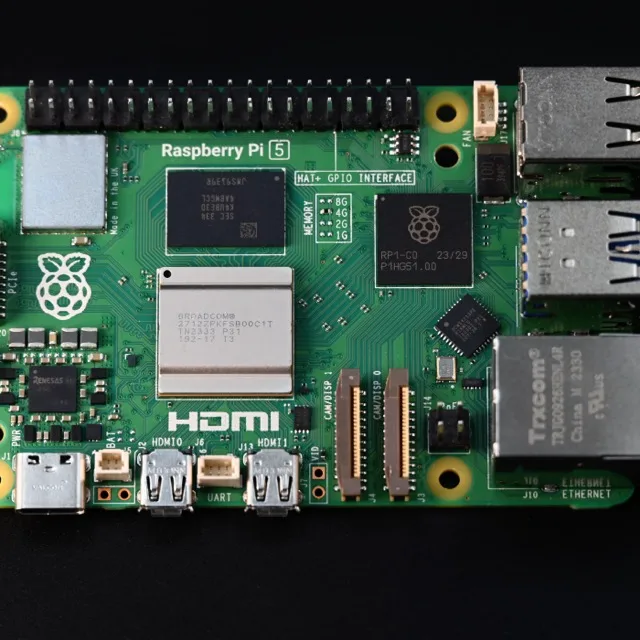
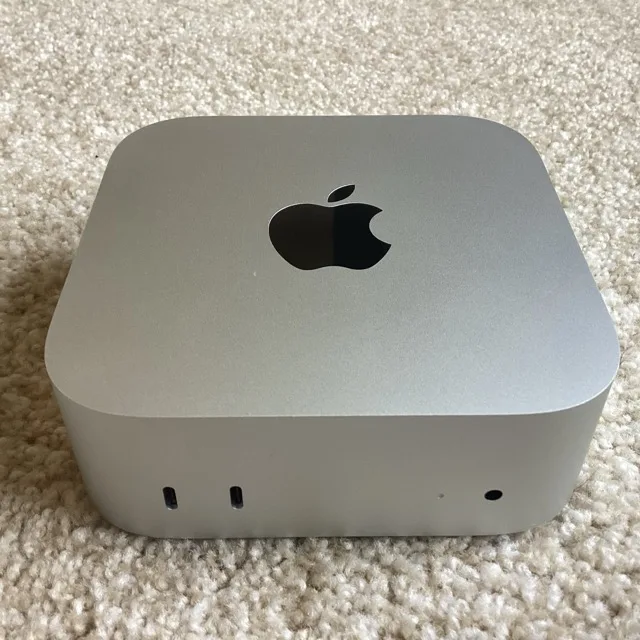
A Mac mini fits the compute role above, with enough unified memory to run an 8-14B model at home. A Raspberry Pi fits a lighter, always-on role: holding and sharing storage rather than heavy inference.

Apple Mac mini desktop computer
Edge AI tier · Compute

Mac mini

Unified memory and low idle power make it one of the more approachable machines for running an open-weight model at home.

Raspberry Pi 5 single-board computer
Mobile / Edge tier · Storage

Raspberry Pi

Low power draw and an attached disk make it a natural fit for always-on storage capacity rather than model inference.

Photos: Chiru-2, SimonWaldherr, Wikimedia Commons, CC BY-SA 4.0.

Naming compatible hardware, not announcing a rewards program.

Home and site relays remain planned work, and a storage service profile is scoped for a later roadmap phase. Buying either device does not connect it to TOS today. It identifies the class of owner-operated hardware this architecture is designed to admit once that work ships.

Distributed model capacity without surrendering core data.

TOS coordinates independently operated model services while sensitive workloads can remain on customer-controlled local, private, or on-premise nodes. The network settles evidence and value; it does not require central custody of proprietary datasets.

Local-first execution

Sensitive tasks can be restricted to approved local, private, or edge nodes. Routing moves outward only when customer policy permits it.

Minimum necessary disclosure

Service descriptors expose capabilities and terms, not unrestricted access. Task policy limits payloads, tools, endpoints, budgets, and retention.

Proof without publishing secrets

Private prompts, datasets, and outputs stay off-chain. Signed receipts, hashes, and evidence references provide accountability without publishing the underlying content.

No single-company chokepoint

Plural providers, registries, and owner-operated nodes reduce dependence on one company, region, or platform policy. If one route fails or refuses service, agents can discover policy-compatible alternatives.

Designed to reduce data exposure, not to make an impossible absolute guarantee.

Security still depends on node hardening, encryption, access control, trusted runtimes, and operator practice. Highly sensitive workloads should remain on explicitly approved customer-controlled nodes.

Not a bet against any model provider.

TOS does not train models and is not trying to be preferred over any foundation-model provider or inference stack. It is neutral to which model a node runs. Its job is the identity, discovery, quoting, evidence, and settlement that let that node be found, trusted, and paid at whichever tier the request lands on.

Digital services. Physical intelligence.

Coordination, settlement, and trust sit between independently owned supply and global demand.

Swipe to explore the full stack →
The TOS authority stack Demand and supply meet through a stateless gateway that only discovers and relays. Commercial facts are committed to the TOS Service Protocol and settled against finalized TOS Core state, which is the only normative authority. Execution runtimes perform bounded work and return signed evidence, and hold no authority over the registry or commercial terms. DEMAND Autonomous agents Agent applications Human operators SUPPLY Owner-operated nodes Models and data Edge terminals GATEWAY Discovery and relay. Holds no protocol authority. TOS SERVICE PROTOCOL Agent identity · Capability · Accepted Quote Escrow · Receipt Commercial terms are committed here, never held by a gateway. EXECUTION Performs work bound by an Accepted Quote, returns signed evidence. No authority over the registry or commercial facts. TOS CORE Finalized on-chain state. The only normative authority. Network fees in native TOS. Services priced in stablecoins issued on TOS. settles and anchors

Not the biggest edge. The right one.

A terminal beside a camera, robot, vehicle, or production line can execute where remote clouds face latency, bandwidth, privacy, connectivity, or safety constraints.

TOS treats these devices as site-bound service terminals, not miniature GPU clouds. Local real-time work and independent safety controls always outrank external network tasks.

Read the Physical AI architecture

Disconnected by design

Approved local workloads continue offline with bounded authority and idempotent reconciliation after reconnect.

Real-time work comes first

Safety interlocks, control deadlines, and local perception pre-empt external services and background jobs.

Updates fail safely

Signed artifacts, compatibility gates, staged rollout rings, health checks, and known-good rollback protect fleets.

Execution stays isolated

No public shell, raw actuator, Docker socket, or unrestricted host access. Every queue and resource has a bound.

Proposed autonomous agent OpenFox

Owner-directed. Policy-bound. Built to hunt for productive work, not unrestricted access.

The autonomous earning layer

Finds AI work. Earns while you sleep.

OpenFox is the proposed autonomous earning agent for TOS. It discovers candidate paid tasks, matches them to owner-approved skills, evaluates cost and risk, executes through bounded AI capacity, and follows the result through evidence and settlement.

The model may plan and recommend. Deterministic policy decides whether OpenFox may accept, spend, sign, use a tool, or dispatch a task. The owner key stays outside both OpenFox and tos-ai-worker.

Read the OpenFox architecture
01 · Trust rails tos-protocol

Establishes the trusted market: identity, discovery, tasks, authorization, quotes, payments, receipts, and settlement.

02 · Production tos-ai

Supplies bounded production capacity: approved models, local admission, runtime adapters, resource control, and safe cleanup.

03 · Autonomous operator OpenFox

Lets those capabilities seek compatible work, act within an owner mandate, and pursue revenue through accountable execution.

  1. 01Discover

    Watch bounded, provenance-preserving sources for paid tasks that match approved skills.

  2. 02Verify + price

    Recheck identity, escrow, terms, cost, margin, risk, deadlines, and delegated authority.

  3. 03Execute

    Reserve capacity and run only approved plans, models, tools, and network destinations.

  4. 04Settle + learn

    Submit evidence, observe payout or dispute, and update bounded accounting and performance history.

Designed for bounded autonomy, not autonomous ownership.

OpenFox is a proposed product, not a deployed earnings service. Revenue is never guaranteed, discovered content is untrusted, and owner policy, spending limits, terminal admission, and chain state remain authoritative.

See how the token is distributed.

Continue